

1887: The Housatonic Line
150 years later, we need this back

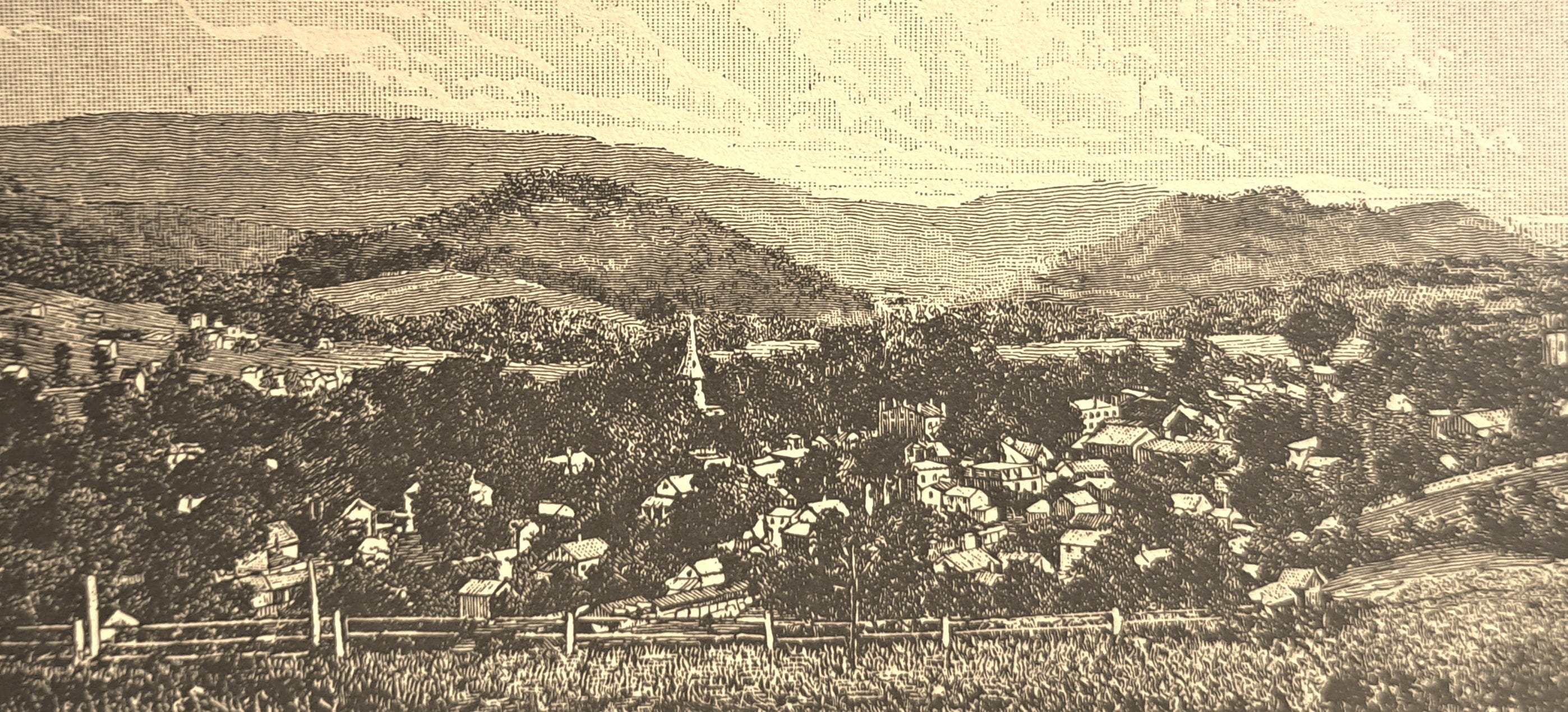
New York to the Berkshires, 1887
From The Book of Berkshire, republished by Past Perfect Books in 1993:
A journey from New York city to the southern half of the county, which is the portion of this famous region most sought, requires but four hours and a half in drawing-room cars or in first class passenger cars that are the tidiest and best furnished and finished ones in the United States. The distance is about 150 miles. From Boston the time is less than five hours, the distance being a little over 150 miles. Three lines of railway cross the region, and a line of railways extends up and down. The east and west line at the north is the Hoosac Tunnel road; the middle line is the Boston & Albany, and the south line is the Hartford & Connecticut Western, which connects the Hudson and Connecticut rivers. From the center of the county, at Pittsfield, to the north end runs the Pittsfield & North Adams railroad, and towards the south runs the Housatonic [line] to Bridgeport, where connection is had with the New York, New Haven & Hartford [line]. These railway lines afford accommodations for travel to arid from the region that make it easily accessible, and that make the return to the city an easy and short matter.
No railroad in the country has taken greater pains to accommodate people who go to summer resorts than have been taken by the Housatonic [line]. Through cars on express trains are run to and from New York in about four hours and a half, and, if the traveler does not care to take the drawing-room car, he can ride in a car that almost seems like one, with its brussels carpet, toilet-room, fine upholstery and cabinet finish. He can leave New York in the morning and eat a noon dinner in Berkshire, or leave near the close of business hours and eat a late dinner or supper here. The facilities for return are equally good, for he can leave Berkshire at several convenient times, the last one being about 5 p.m., when an express train leaves, to arrive in New York about nine.
Let’s imagine this service in 2030! Though perhaps not with brussels carpets.1 Hard as this is to fathom, trains the 19th century were as fast as most Amtrak trains today.
First milk train
From Steelways of New England, published by Creative Age Press 1946
By December, 1841, as we have seen, the Governor of New York was speaking warmly of the excellent rail-stage-boat route—partly via the Housatonic—between Albany and New York. The road's northern rail-end was then at West Canaan; it reached the state line in the spring, and almost simultaneously a continuation of it, the Berkshire Railroad, was opened from the state line to West Stockbridge, thus completing a continuous line of rails from Albany to Bridgeport and a shorter Albany—New York route than the one via Springfield and Hartford. Later on, the Housatonic built an extension to Pittsfield, and continued to be a prosperous concern for many years thereafter.
It is interesting to note that this was one of the first railroads to ship milk in large quantities into New York City. The directors reported in 1868 that 100,000 quarts a day were going down the valley, from as far north as Pittsfield; and the Housatonic Valley Milk Association triumphantly said that (even in those pre-pasteurizing days) the old dictum that milk could not be successfully shipped more than a hundred miles had been disproved.
The Train Campaign, which hosts the Train Time media project, was inspired by people who longed to see passenger rail service in the US to rival the services they had enjoyed elsewhere in the world. That vision remains strong today!
At the end of this very short film (2.46 minutes), you’ll hear author Simon Winchester describe what we can bring back to the Berkshires and northwestern Connecticut:
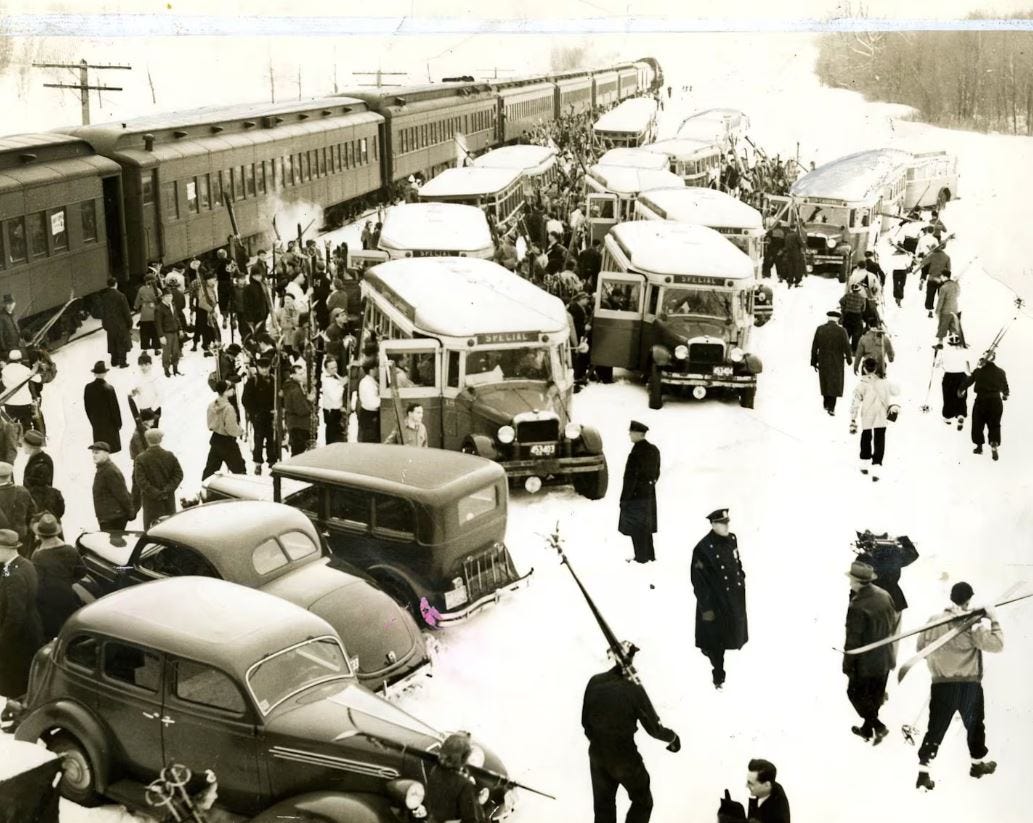
All content in Train Time is shared under a Creative Commons License (CC BY-NC-ND):
Attribution (BY) – Always credit the author and Train Time as the original creator with a tag or link to https://traintime.substack.com.
Non-Commercial (NC) – Content cannot be used for commercial purposes.
No Derivatives (ND) – Content may not be modified, adapted, or repurposed.
A Victorian-era patterned carpet or rug: “Brussels carpets are a level loop carpet where the wool not exposed as pile is carried in a dense backing - colors are drawn to the surface as needed for the pattern, and up to five colors can be used in a single row. By alternating colors, or 'planting the colors' in the rows, many more accent colors can be skillfully introduced into the pattern. Brussels carpets were first woven in the early 18th century, and by the late 18th century Kidderminster was the main center of production for Brussels.”